norman's website
  • Home
  • Blogs
    • Scraps of life blog
    • Creative Academic >
      • BYOD4L BLOG
    • Garden Notes
  • Books
  • Change
  • Creativity
  • Professional services
  • Contact me
  • EC-Conference
  • Delft
  • luminate
  • OU employability
  • Qinghai
  • CISC
  • NTU
  • creativejam
  • CRC
  • GMIT
  • BNU STUDY VISIT
  • AIT
  • portsmouth
  • DIT
  • TLC
  • BERA
  • ICOLACE4
  • PDP
  • OUC
  • MMUni
  • Derby
  • dmucreatives
  • Chester
  • Brighton
  • Buckinghamshire
  • Hallam
  • St Marys
  • LIMERICK
  • kingston
  • UWL
  • SEDA
  • MACAO
  • Beijing
  • IFIUT
  • CRA seminar
  • FBSEworkshop
  • birmingham
  • Creativity in Higher Education
  • graduatestandardsprogramme
  • MAKING MEANING

Some thoughts on social leadership

17/7/2014

1 Comment

 
Picture
I have begun working on the September issue of Lifewide Magazine which Julian Stodd has kindly agreed to guest edit on the theme of the 'Social Age of Learning'.  Julian has written a lot on this matter and his thoughtful blog is full of great ideas and visual representations and I knew we would not be short of material to work with. I read his e-book on the Social Age and also trawled through his blog before putting together half a dozen articles that I thought would capture some of the most important ideas. By doing this I was able to identify how we might add value to Julian's thoughts and interpret, translate and contextualise his ideas for the Lifewide Education community. Intuitively, I feel his writings have much to offer our approach to learning and developing but I must first apply them to my own life in order to understand how we might use them.

Social Leadership: an idea worthy of attention
One of the ideas that caught my attention was the idea of Social Leadership. 'The Social Age requires Social Leaders: leaders who work within and alongside communities to create meaning, to deliver.'1

All leadership is social,  its "a process of social influence in which one person enlists the aid and support of others in the accomplishment of a common task" 2 There seem to be two senses in which the term social leadership is used. '[it] has been used in a technical sense by researchers for over fifty years. More recently it is being used by community organizations and others to describe a much broader perspective on people-centred activities aimed at creating a better world. Beyond this, I would suggest that it has great potential for use within the technical vocabulary of leadership studies, as a framework for the construction and evaluation of more comprehensive ways of understanding what it means to lead.' 3

My sense is that Julian is using the term as part of the conceptual vocabulary of what it means to lead in the Social Age whereas I believe that social leadership needs to be connected to a social purpose. For example, social leaders are "leaders with a social purpose who seek to change some aspect of the[ir] world"4 or 'social leadership means to devote one’s life and talents to improving society'5.  Social leadership 'must also take into account human values, both ethical and aesthetic. Ethical values are usually expressed in terms of what we think is right, or good......Aesthetic values refer to such concepts as harmony and beauty, elements that are essential to our perception and appreciation of the world around us...'3

My role as founder and leader of Lifewide Education Community Interest Company is consistent with conceptions of social leadership that are motivated by social purpose. I have ideas and a vision for how our educational system could be improved and have tried to enact that vision through my work as an educator and social leader. I am seeking to influence others by sharing my ideas and attracting other people who share my values and beliefs and I am trying to create the conditions where people who would like to develop and apply these ideas can belong to a community of shared interest. Our purpose as an organisation is to serve our community of self-identified people who are interested in the idea of incorporating a lifewide learning perspective in formal education.

The NET Model of Social Leadership
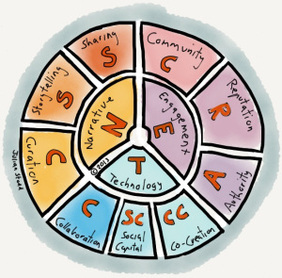
Figure 1 Julian Stodd's NET Model of Social Leadership1

Julian's NET model of social leadership is concerned with the WHAT and HOW of social leaders but not so much the WHY? His NET model of social leadership contains three core concepts Narrative, Engagement and Technology and nine components -  Curation, Storytelling, Sharing, Community, Reputation, Authority, Collaboration, Social Capital and Co-creation.  While I agree that all these components (and more) are associated with social leadership I am not clear why the core components have been selected. The NET model does not so much provide me with the answer to my question, 'what does social leadership mean to me?' rather it provides me with a useful aid to thinking about the idea of social leadership in the context of my role as founder and leader of Lifewide Education.

Importance of social purpose
I have a 'social purpose' and I am 'seek[ing] to change some aspect of the world' and the reason I established the Lifewide Education Community Interest Company was to create an organisation to help me engage 'the world' to try to raise awareness of the idea of lifewide learning and personal development and convince people and institutions (particularly universities and colleges) of the value of a lifewide approach to encouraging, supporting and recognising learning in higher education.

Social leadership without a purpose is of little social value. Social purpose and value which inspire a vision of a better society, need to be at the heart of any model of social leadership. Without these there is no compelling reason for people to do anything different or to commit to being part of something they believe will lead to change that is consistent with their ideals for the society they want to live in.

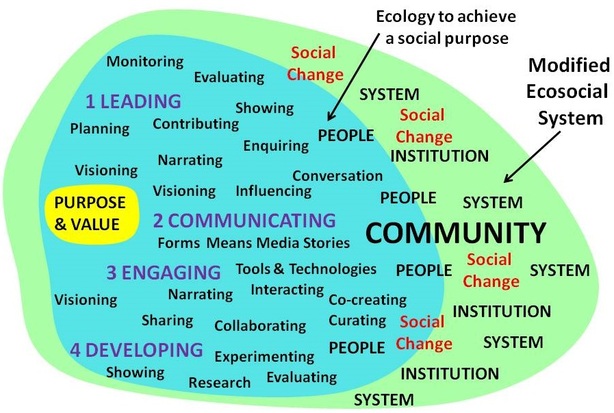
My representation of social leadership. All this stuff goes on, some of it will be planned and co-ordinated but much of it will be emergent and improvised. The social leader creates new ecologies for learning, developing and achieving the social change he desires. Comments and suggestions for development welcome.
Picture
My representation of the dimensions of social leadership (Figure 2)   has SOCIAL PURPOSE & VALUE at its heart and four interconnected core elements: LEADING, COMMUNICATING, ENGAGING & DEVELOPING. These elements act together in a coordinated and integrated way to enable social leaders to create new ECOLOGIES6  for achieving the social change they and others desire and in the process they help co-create new ECOSOCIAL SYSTEMS.

1 Social leadership is about 'leading'. It's about envisioning and articulating a sense of purpose, direction and more concrete goals, then creating and working with others to co-create the conditions that encourage movement towards these goals. It involves all the things you associate with leadership like planning, securing and managing resources, building capacity to do things, contributing time and effort to make things happen, monitoring and evaluating progress and making self-accountable to the community. Actions speak louder than words -  It involves modelling one's own behaviour in ways that demonstrate you believe in what you are doing. Reputation and authority are personal rather than organisational and they have to be earned through things that a social leader does.

2 Social leadership is about 'communicating'. Social leaders have to be communicators, how else will people know what they stand for and understand what they want to achieve?  They have to turn abstract ideas into stories that people can understand and care about. Communication is about trying to influence the way people think and see the world and offering alternatives to what currently exists. Social leadership is about creating and co-creating narratives that explain the proposition for social change and inspire and compel people to get involved. These forms of communication facilitate development of relationships connecting people to the purposes, values, ideas and challenges that underlie the social enterprise. Communication takes many forms - written, spoken, visual and may involve many different media using many different tools.  

The internet and technological tools of the Social Age provide many aids to this process and enable social leaders to reach out to people in ways that would not have been possible even a few years ago. As Julian Stodd points out the social media we now have access to enable 'social collaboration and reach [and] socially collaborative conversations, about the co-creation of meaning in communities, about supporting engagement and development in these communities and about collaborating, to achieve more than we ever can alone'1 They help social leaders accomplish the social changes they are seeking.

3 Social leadership is about 'engaging' people: Having identified a purpose or cause that will connect to what people will believe and value the role of the social leader is to try to involve people in bringing about social change. This is about the ways and means or capabilities that leaders and their teams can bring to the task and these will reflect the nature of the proposition and the cultural practices of the domain. Engagement may involve such things as distributing information, holding meetings and conferences, creating on-line forums and blogs, conducting inquiries, surveys and other research, sharing practices, collaborations, co-creative activities, campaigns and other forms of collective actions, utilising tools and technologies of the Social Age. The social leader is also responsible for ensuring that the products and results of such activity are curated and utilised in the further pursuit of social goals.

Through these processes, relationships and activities people who are interested begin to form community - at one level this may simply be declaration of interest in an idea and a willingness to receive information and stay connected and informed. At another level it might involve advocacy, campaigning and the creation of new practices. Eventually, if sufficient people buy into the ideas and ideals, social change may occur.

4 Social leadership is about developing ideas so they can be turned into new social practices:  social leaders take ideas and purposes that motivate them and develop them, with the help of others, so they can be applied more easily.  Development  means a progression or movement from a simpler or lower to a more advanced, mature, or complex form or stage. Development is a process to achieve certain goals in certain ways or a trajectory along which certain things change or are accomplished. It  is the process that enables everyone to change themselves and the social worlds they inhabit. It is the process through which new things - material or virtual objects, social practices and performances are brought into existence or changed. 

Social leaders share their thoughts and ideas and encourage others to criticise or offer different perspectives. They seek to underpin their ideas with research and enquiry and involve themselves and others in developing evidence to support their propositions. They connect to authorities that are willing to lend their support and they collaborate with people who are willing to show how ideas might be applied. They experiment with their own practices and evaluate the results.The process of developing and applying ideas with others leads to the co-creation of new meanings and deeper shared understandings. It is through development that people begin to see the world differently and they begin to embody this change and eventually this is how social change is accomplished.

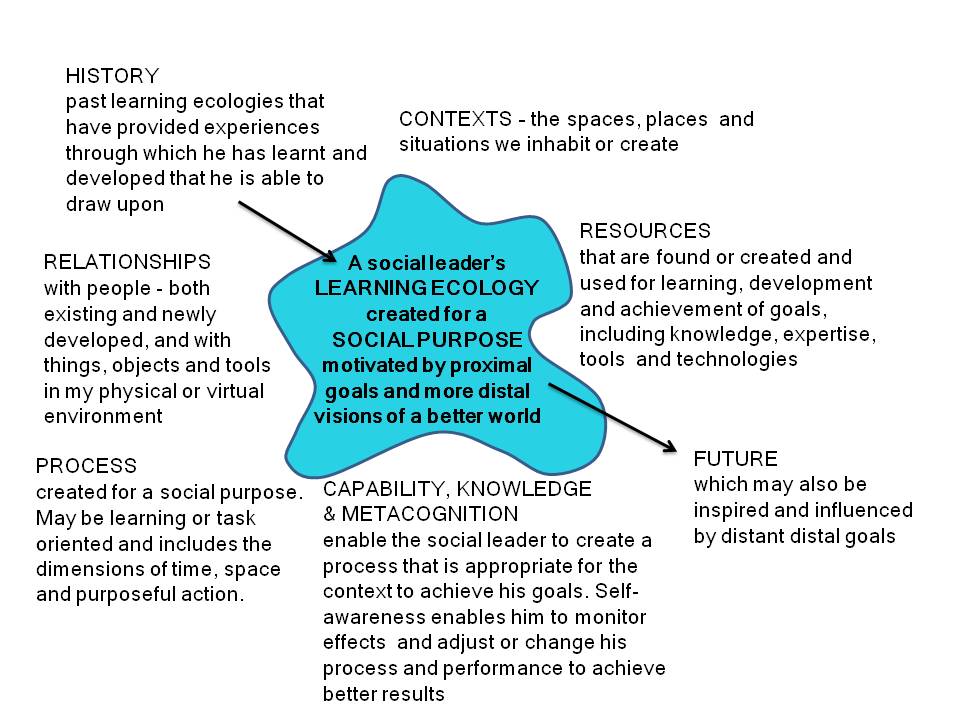
5 Social leadership is about creating ecologies for changing existing eco--social systems: Inspired by their vision for a better society, social leaders create new ecologies comprising their processes and contexts, relationships, networks, interactions, tools, technologies and activities that provide them with opportunities and resources for learning, developing and achieving something of social value (Figure 3). As they embrace and include people who share their spirit, values and beliefs into their learning ecology they establish new eco-social systems for change.

My representation of a learning ecology. Social leaders are creators of new ecologies and eco-social systems 6
Picture
Jay Lemke7 describes the important features of ecosocial systems as:
•     the different contexts and communities in which individuals co-exist in relative stability and inter-dependence 
•     a set of overlapping but distinct spaces/places each with its own rules, affordances and constraints 
•     a self-regulating system that consumes, recycles [and creates] resources 
•    an organisation in which change occurs over time, modifying individuals and inter-relations, without destroying the overall    
     cohesion and balance – ie the ecosystem is both adaptive and resilient to change 

A social leader creates new senses of what is right and what should be in existing ecosocial systems and helps create the conditions for their adaptation. Their significance is to 'modify... individuals and inter-relations, without destroying the overall cohesion and balance' of the ecosystem.

One final thought, implicit to the pursuit of social change in the ways I have described above, is the notion of social capital. 'Effective social leaders have high social capital and develop it in others. This generosity and humility reinforces reputation and authority'1 It is not something I would claim for myself but  social leaders need self-belief and self-efficacy to sustain involvement in their social project.

 Invitation
These thoughts have been inspired by Julian Stodd's thoughtful blog on social leadership. I welcome views and further perspectives on these ideas. [email protected]  

Sources of ideas
1 Stodd, J. articles on Social Leadership http://julianstodd.wordpress.com/?s=social+leadership
2 Chemers M. (1997) An integrative theory of leadership. Lawrence Erlbaum Associates, Publishers
3 Campbell, R. A. (2012) http://ezinearticles.com/?What-Is-Social-Leadership?&id=7155665
4 Clore Social Leadership Programme http://www.cloresocialleadership.org.uk/about.aspx
5 http://www.thesocialleader.com/social-leadership/  
6 Jackson, N. J. (2013) The Concept of Learning Ecologies, in N. J. Jackson and G.B. Cooper (eds) Lifewide             Learning, Education and Personal Development E-book  Chapter A5 available on-line at http://www.lifewideebook.co.uk/conceptual.html
7 Lemke, J. (2000) Across the Scales of Time: Artifacts, Activities, and Meanings in Ecosocial .  Mind, Culture and Activity 7 (4), 273–290 available on-line at http://www.jaylemke.com/storage/Scales-of-time-MCA2000.pdf

What does social leadership mean to me?
social_leadership_what_does_it_mean_to_me.pdf
File Size: 405 kb
File Type: pdf
Download File

1 Comment

Commitment

9/2/2014

1 Comment

 
Picture
To commit to something is to harness your own willpower to pursue and engage with a purpose, a cause, a problem, challenge or opportunity. By committing to something you are reducing your freedom to engage with other things. Fundamentally committing to something is a choice - we may feel obligated or coerced but we are still making a decision to engage with something conscientiously and to the best of our ability. We usually commit to something because we care about it and it's personally meaningful and or has deep intrinsic interest or value. Commitment to something is deeply relational whether it is with people, ideas, objects or enterprises. When we commit to something we usually know that it will involve us over a significant period of time.For some things we want to know exactly what are commitment will be before we agree to getting involved but for other things, particularly involving relationships that are most significant to us, we are willing to enter into a commitment without knowing the detail of the obligation. 

Developing something is a major focus for commitment. It requires us to commit time, energy and effort (physical, intellectual and emotional) and it usually involves reducing our involvement in other things. Life is never simple and all the things that are important to us require our commitment so we end up with lots of commitments that jostle and compete for our attention - our families and relationships within them, our jobs, our own interests and aspirations. So everyday life is made up of lots of commitments that connect and span our lifewide experiences. Our commitments are closely associated with what we perceive are our purposes which are ultimately the things that drive us and give our life substance and meaning. By taking on new commitments we are extending our learning ecologies.

These thoughts were prompted by my recent involvement in an on-line 'course' called 'bring your own device for learning' (BYOD4L) designed and organised by Chrissi Nerantzi and Sue Beckingham. When I reflect on the experience as a development process  commitment seemed to very important - perhaps because by joining the course I was adding to my existing commitments and that required effort above and beyond what I was already doing.

The course required commitment to sign up, familiarise myself with the design and expectations, engage with the resources and the learning opportunity (in my own way), and try to record my own learning process and what I think I gained from it. The commitment to try and apply what I learnt and to keep trying even when something didn't seem to work and overcome the inevitable barriers of using these new forms of social media for someone who is not particularly adept. 

During the course I was conscious of juggling this new commitment with my other obligations - like the two days I look after my daughter's twins and various work obligations and I was conscious of the opportunity cost in engaging with technology initially to be competent and confident in using it and then to apply it. I had several instances during and immediately after the week when what I tried didn't work and I felt frustrated and demotivated because I hadn't made the progress I had hoped for and these feelings of negativity had to be overcome.

I was thankful that one person tweeted that they had had trouble with an app. I often have trouble trying to make things work and this aspect of learning often gets glossed over in the enthusiasm for the technology. The things I valued most - that encouraged me to persist and therefore facilitated my development were: 
1 The resources. Sue's collections of tools and the introductory videos are a great resource that I have embedded in my own website for future use. 
2 Examples and illustrations of the use of the technologies.. these were great in showing what could be done. In particular some of the curatorial tools like scoop.it and paper.li. which I have tried to apply. 

It was also great seeing the enthusiasm, commitment, teamwork, care and attention and personal support the facilitators gave to the process and the people in it. A real lesson in the energy, passion, care, dedication and expertise necessary to make these sorts of learning experiences work. And hopefully I could use the experience and insights to design my own on-line learning experience. I was particularly appreciative of the fact that I was able to navigate through the resources and prompts in my own way. There was a structure but no one forced me to follow the linear pathway. I could chart my own 'course'.

Offline I had some good conversations with my son who managed to spend a bit of time looking at the resources and tuned into the twitter conversation most evenings. So it achieved that objective. 

I did try to reflect on my own thinking and practice in the contexts of my own circumstances and I set up a dedicated BYOD4L blog for this. 

The proof of learning is in the doing. It's one thing to know how to do or use something but another to apply that learning. Since the course I have continued to use paper.li and develop 'lifewide zine' a twitter-sourced companion to Lifewide Magazine. I also felt more confident in using twitter and I spent more time on it. I felt that I understood it much more. I taught myself how to embed twitter feeds and tweet buttons into our websites and then populated resources like e-book chapters and magazine issues with tweet buttons in the hope that when people come across them they will retweet.

I also 'played with' paper.li  With Chrissi's help I set up a Lifewide Zine as a twitter-based companion to Lifewide Magazine. There is still lots to learn but I got over the initial hurdle. I also continued to develop my use of explee animation software creating and embedding several animations in our websites.

These three tools - twitter, explee and paper.li have opened up a whole new area of communication for me that if I had not committed time, energy and effort would have remained hidden. The value of commitment to personal development is in being able to do something I couldn't do before and in this way improving my ability to continue working with my higher purpose - to promote lifewide education.

1 Comment

More on slogging and emergence

25/1/2014

0 Comments

 
Picture
I had another experience of  'slogging' this week. One of my development projects on behalf of my family and my ancestors! is to try and construct our family history. I began by recording some conversations with my mum and dad. They are now approaching 90 and they are able to recollect their childhoods and the stories they were told about their families. I turned this into what I hope will be the first chapter of a family history that my siblings and my children can carry on developing. I then turned to Ancestry.com thanks to the generosity of my sister who bought a subscription. Over the last couple of months I have spent a lot of time (probably far too much)  slogging away at the various records that can be accessed. Sadly many of my ancestors were called Thomas Jackson and they lived in Manchester and that generates an awful lot of possibilities. So far I haven't even got my grandfathers birth certificate. But using my imagination and I hope reasoning power I have fabricated a lineage going back to the 1790's. It might of course all be wrong but the point of my story is that in slogging through the records this week for probably the best part of  6 hours and feeling very frustrated because I wasn't making any progress, I suddenly found a record that seemed to fit and push me back another generation. The joy that came from this moment of seeming to make progress out of this tedious search was enormous and it was a real boost to my morale causing me to stay with it for much longer than I intended. So out of slogging can come reward and satisfaction as a bit more of a problem seems to be resolved and out of these moments progress is made and potential solutions emerge that would not have happened without the slogging because the information or idea is deeply buried within the quest. So slogging away at something may be deeply dissatisfying but it is the pathway to discovery and achievement.

And yet one more example of emergence today. I had an email from a talented illustrator I had worked with in the past. It was a speculative email enquiring about possible work opportunities. I emailed back to open up a conversation about a possible role as an artist in residence at our forthcoming conference. Over 3 or 4 emails I tried to draw him in. I could see he was interested and he eventually agreed. I was delighted and immediately created a new web page to host information about our two artists. I then spent the best part of two hours creating a new explee animation to show off his work. It was both enjoyable and I felt creative and I was pleased with the result. There was no way that I could have anticipated this activity in advance of it happening. It emerged through interactions in my work ecology and being able to create opportunity for someone else to apply their talents to a new situation that they found appealing.

0 Comments

Role of 'slogging' in development

17/1/2014

1 Comment

 
Picture
The creativity in development project focuses attention on the way creativity emerges through individuals' development processes but this week I have experienced very little creativity as I slogged away reading and editing contributions to an e-book. But 'creating' the e-book is a really important part of  our developmental strategy and giving feedback on each draft manuscript is essential to helping the contributors develop their piece. 

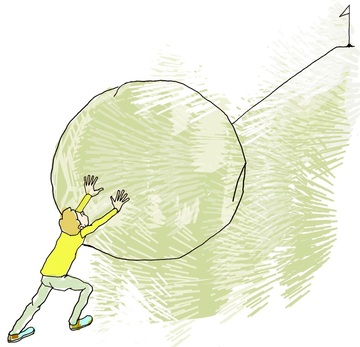
The experience caused me to reflect on the role of 'slogging' - in developmental processes.  To slog is to keep doing something even though it is difficult or boring. Slogging involves working on something in a steady, determined, methodical and often repetitive way. It also implies that progress is slow and perhaps laborious, in contrast to starting something new which is full of enjoyment or finishing something where there is a sense of achievement and fulfilment.

When you start something your imagination is engaged and you think freely and adventurously about the what it is you want to do. You feel energised as you put the building blocks in place like new relationships, infrastructure or the making of tools and you see a lot of progress in a short space of time. But after this initial excitement there is often a much longer period of 'slog', when you just have to knuckle down to work that is more systematic and routine and is perhaps not so interesting and exciting, but which is absolutely necessary for the success of the project. Slogging is often the way you complete something that you started and its where most of the effort and least of the reward resides.

Every significant developmental process has elements of slogging within it and the harder and more challenging it is the more slog there is. In fact for some development projects perhaps 80 or 90% of the time can be categorised as a slog. Slogging away at something requires persistence and determination and focus. It's easy to get distracted when you are in slogging mode. I recognise the symptoms of continuously looking for things to do other than the things that I should be working on - including writing this piece.

So how do I deal with this need to slog in a development process? The first strategy I use is to convince myself that it has to be done, not tomorrow or the next day but now, and the best way of doing this is to publicly commit to a timeline. Another strategy is to break the job that needs doing into smaller bits and set a target - I'm going to do these things by this time. The third thing I do is reward myself by taking a break and doing more interesting things when I have done a certain amount of slogging. My daughter who has been revising solidly for her mock GCSE's for several weeks became very adept in this technique. The fourth thing I do is periodically make a list of what I have done so I can see the progress I have actually made.

But even when we are slogging we can still be inspired if we are able to notice the right things. I watch my daughter, who is a mum to three young children including 18 month old twins... slogging away day after day. It's a good word to describe the daily routines she undertakes. I know it's hard work because I look after the twins one day a week.. The only thing she ever complains about is not having enough sleep and the effect that this has on her ability to perform her motherly duties the next day. The way she approaches her tasks  teaches me how to extract pleasure and joy from the many moments that emerge when you are looking after children if you approach them positively and imaginatively, and you look for the good and interesting things to emerge. She is a master at turning  the repetitive and mundane into joyful experience. And I guess this is where the inner motivation to sustain herself resides as well as the sense of purpose, duty and responsibility for the care and wellbeing of her children. I guess the reward for all the slogging involved in bringing up young children is to see them learn and develop so that they are able to do the things they need to be able to do to be successful in life.

Perhaps we derive different psychological benefits from starting something and slogging through it. Starting gives us the motivational force derived from visions and being able to see a different future while slogging enables us to build resolve and determination to secure that future. Looking back over the last few days I didn't feel at all creative and perhaps there is little in the way of opportunity for creativity when you are slogging away at something. But one thing is certain, while creativity is essential to the success of a development project so is slogging. Please share your experiences and insights of slogging in the development process.

1 Comment

Tools that liberate ideas

9/1/2014

0 Comments

 
Sometimes the development of an idea falters because it is just too expensive to turn the idea into a practical reality. But good ideas are never lost they just get put on the back burner. About 18 months ago I started a business project called storyshare. The basic idea was to help people create stories that were personally meaningful and help them bring their story to life through illustration, sound and animation. I made a business plan and attempted to find some illustrators - one of these became our LWE community illustrator so this part of the process was a success. But at the time I failed to see how I could make it a commercial success as I could not animate the illustrations without a great deal of expense and I knew that the potential market would not buy the service at a price that would cover the costs and make a small profit. So the idea was put on hold - until this week when I discovered the explee animation tool. I can now see how it will be possible to animate the illustrations in an inexpensive way so the cost of the service would be limited to the illustrations themselves. I thought it was a great example of how advances in technology can suddenly liberate and idea.  I offer my story as an illustration of what explee can do.  The illustrator is Kiboko Hachiyon. Thanks again to Chrissi Nerantzi who drew my attention to explee.
0 Comments

Animating your ideas

6/1/2014

0 Comments

 
Picture
If creativity is a novel relational 'product' growing out of the circumstances of our life (Carl Rogers 1960) then development - the ability to be able to do something new,  is an example of such a product.

Sunday was mostly a wet and windy day so I spent quite a bit of time on my computer. I began exchanging emails with Chrissi Nerantzi about the possibility of creating an on-line course and over the space of a few hours she sent me and my son, who is also working with us, a whole pile of links to various web tools and examples of what the tool was capable of doing.  Here's an example
From: Chrissi Nerantzi
Sent: 05 January 2014 22:23
Subject: You have received a YouTube video!
http://www.youtube.com/watch?v=dksXr4GQMfk&sns=em
Something like this might also work for the conference? 
Chrissi


My son followed the link and gave me a glimpse of what it could do. It's a powerful, intuitive drag and drop tool for creating short animations which can be uploaded to youtube. I love animations and over the years I had financed and collaborated in a number of animation projects and I know how expensive and time consuming they are to produce so I was really excited about the possibility of being able to produce one for myself.

This morning I had a go at making my own animation through a process of trial and error. Over an hour I managed to create a 40 sec clip introducing our conference which I embedded in the conference website. In doing it I knew I was trying to achieve something specific. Looking back I can see that I had engaged in a piece of personal development through which I learnt how to make an animation using this software. It was very satisfying to make something so quickly and so easily. I also felt that I was being creative and the clip I produced, being entirely new to the world - was creative.

So my development and creativity emerged and merged from and through the circumstances of my life. Thanks to Chrissi who drew my attention to the tool and my son for showing me how easy it was to use, and having the time, interest and a potential use for the product - I engaged in and completed a piece of impromptu personal development and was able to be and feel creative in the process!

A contribution to the Creativity in Development Narrative Inquiry

http://www.creativityindevelopment.co.uk/
0 Comments

A Family Perspective on Development

30/12/2013

0 Comments

 
Picture
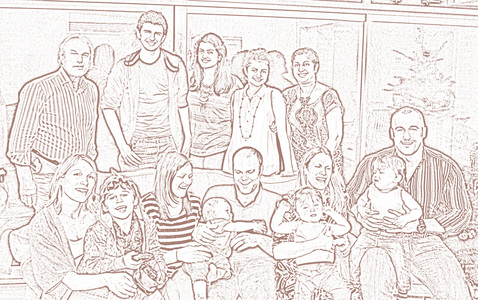
I suppose it's inevitable as we come to the end of year that we look back on it. This year has been particularly eventful with my daughter's wedding, serious illness in the family, visits to family in Australia and visits from family in Iran and many other smaller events and achievements that connect us as a family in interesting and unpredictable ways.

This reflective mood encouraged me to think of the idea of development in the context of being part of a family. It seems to me that development is an important process for keeping the family together and for continually engaging members of the family in the process of nurturing or enabling the development of its members sometimes by design but often as a consequence of the way life unfolds.

Development as a family comes from sharing experiences good or bad and participating in and talking about small and significant events and people so that members of the family develop a shared sense of history and belonging. This was brought home to me recently as I interviewed my mother and father who are in their late 80's in order to record the story of their early life growing up in Manchester in the 1920's and 30's. One reason for doing this was to provide our family with a clearer sense of our history the detail of which will be forgotten when they are no longer with us. In fact the stories that parents tell about us and our childhood are one way in which we can appreciate our own development.

Development as a family manifests itself in what we do to, with and for each other, the sacrifices that are made and the willingness to take on rather than avoid family commitments regardless of cost. In a well functioning and caring family everyone is involved in developing themselves - to be better parents/grandparents, spouses, workers, students etc.. and often for others - children, grandchildren, siblings or the children of siblings.

A year in the life of a large family inevitably contains many events some of which cannot be predicted in advance. This year the serious illness of one family member completely disrupted our plans yet brought us together to support each other. We are all different and more empathic having had this challenging experience but we would have never wished for such an experience.

Development is easiest to see in the youngest members of the family for example my youngest grandson was born exactly a year ago and in the space of a year he has grown from a tiny helpless baby into a little boy able to walk and let you know what he wants and doesn't want to do. But another grandson shows me that not all babies are able to develop at such a pace if they are born with conditions that affect their physical and cognitive development.  Their measures of progress are smaller and much harder to see and harder for them to accomplish. Nevertheless when witnessed they bring much joy and hope for a better future.

Formal learning has an important role to play in the development of a child. A year ago my six year old grandson was a hesitant and reluctant reader. Thanks to the efforts of his mum and school he is now a fluent reader willing to search for and read the books that interest and inspire him opening up a world that is not accessible to those who cannot read. While they are at school or university our children's developmental processes are mostly hidden from us - we gain insights when we see them doing their homework or more intensely when they revise. My youngest daughter is revising intensively for her mock GCSE's at the moment - it's a serious arduous task and she is far more engaged than I ever was at  her age.

As parents we encourage our children to develop their interests beyond the classroom - we want them to have friends and be confident socially, to enjoy and engage in sport, to join clubs and societies, have hobbies and be aware of the world around them. We are happy when they want to get involved but are disappointed when they do not use the opportunities they have and sometimes we pressurise them into doing things that we believe are for their own good. We push and pull, reason and cajole, and sometimes just insist in what we believe is for the greater good of encouraging development that will help and enable our children to be happy, fulfilled and successful in the future. Sometimes these actions result in tensions as our children let us know that this is not what they want to do.

Perhaps our creative involvement as parents in these forms of development is in the success we have in enabling our children to discover things that interest them that they value rather than imposing on them what interests us and what we value. I learnt this the hard way: the fact that I was a geologist seemed to be a burden when I tried to interest my three children in the geology at our feet when we were on holiday. I carried on behaving like this with my three step children. I failed to interest any of them in something I was passionate about but when one of them became fascinated in archaeology he reluctantly admitted that he could see the parallels and could see why I was interested in it!

So our involvement in our own children's development must balance the aspirations we have for them and the need for our children to discover for themselves their own purposes and ambitions and create their own intrinsic motivations for pursuing what they value. There comes a point in this familial developmental process where we start thinking that our children must do things for themselves. For several years we tried to encourage our son to learn to drive. Thanks to friends who were willing to give him lifts and the absence of a need while at university to drive he put it off until he suddenly realised he needed it in order to get a particular job. So he paid for his own lessons and after three goes he passed his driving test. We all rejoiced at the new freedom's this act of development afforded but it only came about when his need created the desire for him to persist until he had achieved this goal.

Most personal development goes on unseen, unrecorded and unrecognised. It just goes on and on as our children grow into the people we hope and they want to become. As parents we rejoice when we think our children are moving in a direction that we think holds promise but despair when they make decisions that we don't think will lead to anything of value.

All too often we forget that much of our own learning was through the experience of trying - regardless of whether something worked out or not. Perhaps this is the hardest lesson in the family development process letting our children make their own mistakes - and being ready to help them when they do. And it can be painful process. There are times when our children develop us in directions that we do not want to go. At times we may have to compromise our beliefs in order to maintain the relationships that make up a family. Above all we have to trust that they will find their own way and make the decisions that are right for them in their circumstances.

So the continuous process of creating and recreating family is a never ending developmental process in which all members are involved for themselves and for others.


0 Comments

Looking back to go forwards

20/12/2013

1 Comment

 
Picture
I suppose it's inevitable as we come to the end of year that we look back on the year. It sort of emerges through the process of receiving Christmas cards as friends and family send their circular newsletters recounting the significant events in their life. We never produce a letter but we do have family conversations looking back over the year, and the same thing happens when you meet up with friends who you haven't seen for a while. This year has been particularly eventful with a wedding, serious illnesses, visits to family in Australia and visits from family in Iran and many other smaller events and achievements that connect us as a family in interesting and unpredictable ways.

This reflective mood is also triggered when I make myself take stock of the progress we have made with Lifewide Education. A year in the life of a project is a significant chunk of time to think about and evaluate the effects of trying to turn ideas into reality.

During the year our community of interest grew steadily and we currently have around 320 registered members. We maintained our existing websites and our presence on Facebook, Linked-in and Twitter and we added our Values Exchange website which enables us to be part of a global network of Vx sites concerned with values and ethics in education. It also gives us new capacity to undertake on-line surveys.  Since April we have undertaken four surveys. It has proved to be particularly useful in engaging people before an event so that the results of the survey can be utilised in the presentations - for example a keynote presentation at the annual SEDA conference was formed around the results of a survey into creativity in educational development.

Under the editorial stewardship of Jenny Willis, we produced four issues of LIfewide Magazine each dedicated to a theme that enabled us to add new knowledge and understanding to our lifewide concept. Brian Cooper's diligent editing enabled us to publish  eleven chapters in our Lifewide Education E-Book - including conceptual reviews and syntheses on wellbeing and learning ecologies, moving biographical accounts of lifewide learning, research into wellbeing and learning ecologies and overviews of lifewide learning in universities and colleges. Our research and scholarship has focused primarily on examining the idea and perceptions of wellbeing and developing and applying the concept of learning ecologies to individuals' learning and development processes, work that will continue through the coming year.

We also developed further our tools for supporting lifewide learning and my daughter (one of our student volunteers) helped us pilot our approach and successfully completed the Lifewide Development Award (LDA) providing future learners with an example of an on-line portfolio of recorded learning and development. We also explored the idea of Open Badges and we are now introducing them in the current stage of piloting. We are working with Christine Fountain at Southampton Solent University's Business School with students on the HR Management masters course to examine the ways in which the LDA might be incorporated into the learning experiences of students.

Members of the team contributed to, and or participated in a total of ten conferences in the UK and overseas. In June, after submitting a paper outlining the idea of an EU-wide Lifewide Development Award I was invited to participate in an EU Foresight workshop by the research group who support development of EU educational policy. This was the first time that LWE has been invited to share our views in a close to policy forum. Through our involvement in conferences we have formed new relationships have with people who are sympathetic to lifewide learning in Saudi Arabia, Malaysia, China and Argentina.  Ultimately, our future lies in the relationships we form with the people who want to promote and implement lifewide learning in their own educational and learning contexts.

Periodically taking stock of where you have got to in any project is a necessary and important aspect of the development process. It helps you maintain that sense of wellbeing knowing that you have tried to fulfil your purposes. Looking back enables you to take pride in achievements and develop a better and more realistic perspective on what has been accomplished so that questions of what to do next become clearer. 

Documenting achievements makes public the ways in which you have lived your life according to the purposes and goals you have established. Publishing our annual review so that the community can appreciate the hard work and contributions that many individuals have made enables the members of the team to gain the credit they deserve. None of the things we have achieved in 2013 would have been possible without the help, support and encouragement of a wonderful group of volunteers and the generous financial support of our corporate sponsor Chalk Mountain Education and Media Services. 

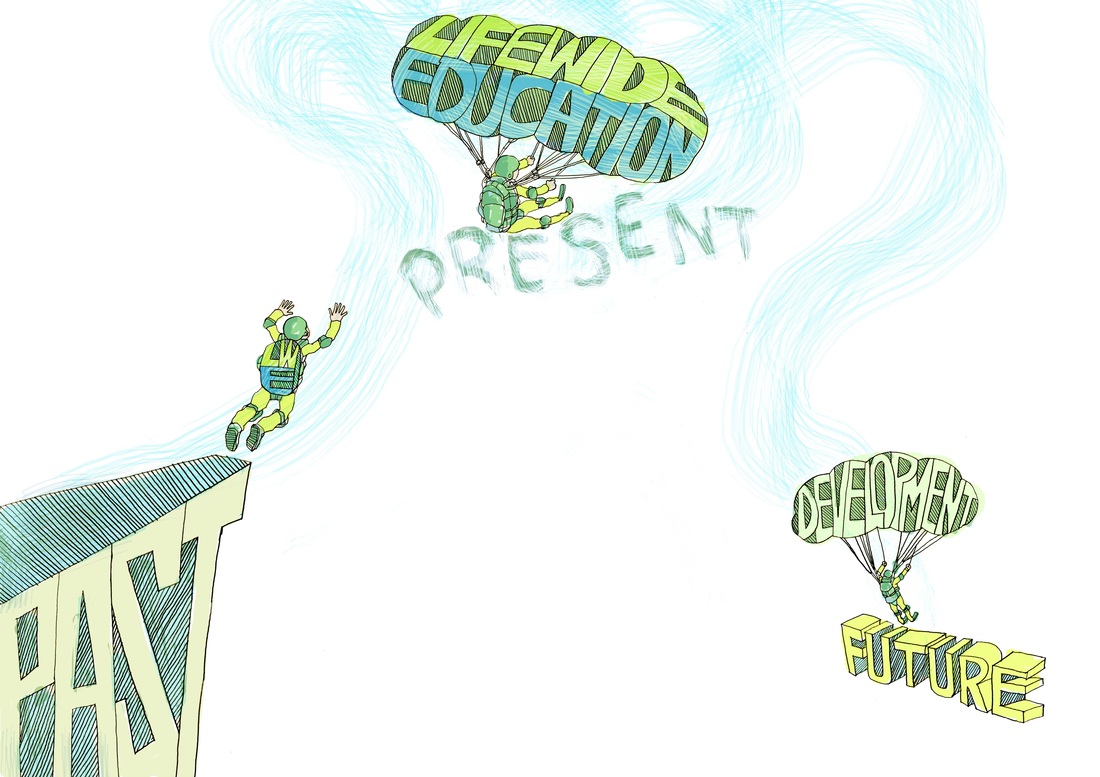
Kiboko's latest illustration sums conveys well the way in which the achievements and experiences of the past year provides the launchpad for the future.The coming year will inevitably bring with it new challenges and opportunities which we can face with confidence.  In March we will achieve another of our ambitions - to host our first national conference on lifewide learning and education in universities and colleges and publish a new E-book on lifewide learning and education in universities and colleges.

Picture
1 Comment

How new development needs emerge in everyday life 

13/12/2013

0 Comments

 
Picture
New developmental needs pop up all the time in life, some of them are driven by interests and curiosity and some are forced on us. For example, this week my laptop suddenly packed up.  It was Monday morning  and I had just started to prepare a presentation. There was a bit of a crunching noise and then a few minutes later the screen went black. I tried to restart it a few times but it went off after a few seconds. All sorts of things go through your mind but the main one is the possible ‘loss’ of all that stuff on the hard disc. This is quickly followed by - 'I wish I'd backed it up recently'.


After complaining loudly to anyone who would listen to me. I put my coat on and took it to our local computer man - Keith who can fix anything. He wasn’t there but his kind assistant went through his routine examination and concluded the fan had gone. It could be repaired for a tidy sum but it should work again.. I was much relieved.

I have another computer a MacBook Pro which I have hardly used and this became the focus for my development this week. Now others have told me how hard they have found learning to use the Mac so I was forewarned.  Everything felt unfamiliar and everything took so long to figure out. I had a deep sense of lacking basic knowledge. I know I have developed a lot of knowledge about PC's over the two decades of working with them and perhaps I assumed that this would transfer easily to the Mac. Most of it did but every so often I would discover that I didn't know how to do something. On the Mac I lacked the skill to do some very basic things, like take a screen shot and re-find my safari short cut when it suddenly disappeared off the bottom navigation bar! The absence of right click and the need to use the top navigation bar all the time felt ponderous and I had to unlearn this procedure.  This carried on like for the rest of the week. I struggled to do tasks that I normally accomplished easily on my old laptop. Even trying to save things in the right folder, or create a new folder to save something in, took time to work out. I noticed that I wasn’t very patient with myself. Instead of thinking - oh this is great I'm finally learning how to use the Mac
I was quite negative and angry about the experience. (Actually there were other things going on like the boiler not working and being cold and having no hot water that added to this mood!).

I have now been using it for a few days and I’m getting better and its obvious that I know more about how the Mac works and I can do more things now than I could a few days ago. I know how to access my emails, I can edit my website and find and upload images to it after downloading  adobe flash player. I activated my iTunes account and downloaded Garage Band and then did the first lesson for piano. And did some Christmas shopping on line. I have more or less completed my presentation in powerpoint but was stopped from copying slides from one presentation to another with an error message I still don't understand. Not much but it’s a start. Even though I know I have learnt something nothing felt creative. In fact quite the opposite I felt unable to do certain things so my creativity was thwarted.  So I guess this bit of personal development is just about acquiring some basic competency before I can do anything creative. I've now got my laptop back and the challenges will be to persist with my Mac and carry on using it.

0 Comments

Starting a new developmental process

6/12/2013

0 Comments

 
Picture


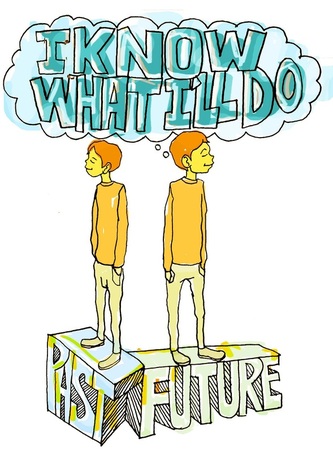
A new development process may begin with an idea, and that idea might take a while to germinate, but it only begins to become a reality when thoughts are acted upon. This week I embarked on another development process that had grown out of 
an earlier process in which I tried to develop a better understanding of the role of creativity in individual's developmental processes. This work was motivated by the need to give a talk at the SEDA conference in November and my desire to try to make my talk relevant and interesting for participants. I created an ecology for learning that I described in a previous blog  (11/15/13) and out of this emerged the suggestion by one of the participants that I might see if others would be interested in sharing their understandings of how their creativity is involved in a particular developmental process by creating a narrative inquiry.

Over the last few weeks I contacted a number of people to see if they would be interested in joining a process. Their enthusiasm for the idea provided the motivation I needed to act. So on Sunday I set up a project website to encourage people to get involved and provide participants with the means to share their narratives and understandings. I also invited one of the enthusiasts Chrissi Nerantz to join me as co-convenor which she readily agreed. I also wrote a short article for Lifewide Magazine to advertise it and posted it on ACADEMIA.COM & LINKED-IN. Only time will tell whether ambitions will be realised but one thing is certain there is much potential and possibility in the idea.

So my new developmental project involves contributing to the process as a participant and supporting the process and encouraging the involvement of others.

So where is the creativity involved in starting this new developmental project? The idea for a narrative inquiry around the theme of creativity in development was not my own so I cannot claim an original thought, neither is the idea new to me because I am aware of other examples. To some extent it must be present in imagining the possibility that new things will or might be brought into existence if certain things are done or put in place. It is the vision of what might come out of the project that provides the energy to actually do something. Organised processes for learning require structures to support communication and interaction. Before today this website did not exist. I have developed websites before so making one is not new to me but the design and content of this one are new. Creativity must also lie in the way a project is framed and communicated to others so that more  of the potential in the idea can be realised. It is most definitely in the way that people are encouraged to become involved and 'selling' the value of being involved. It is also in the way relationships are grown to create the energy, spirit, capacity, agency and inventiveness when people come together around the things they care about. I am delighted that CN has agreed to be a co-facilitator. She positively oozes energy and enthusiasm and it will be enjoyable working with her. Also her willingness to collaborate combined with all the ideas that she will bring increases the potential for me to be creative. Creativity in development is in the thinking, the actions and interactions and their effects, and the relationships that hold the potential for new possibilities

0 Comments
<<Previous

    Purpose

    To develop my understandings of how I learn and develop through all parts of my life by recording and reflecting on my own life as it happens.
    @lifewider1
    @lifewider
    @academiccreator

    I have a rough plan but most of what I do emerges from the circumstances of my life 
    Picture
    Picture
    Picture
    View my profile on LinkedIn

    Archive

    January 2021
    December 2020
    September 2020
    August 2020
    May 2020
    March 2020
    February 2020
    January 2020
    November 2019
    October 2019
    August 2019
    March 2019
    January 2019
    April 2018
    March 2018
    February 2018
    January 2018
    November 2017
    September 2017
    August 2017
    July 2017
    June 2017
    May 2017
    April 2017
    March 2017
    February 2017
    January 2017
    November 2016
    October 2016
    September 2016
    July 2016
    June 2016
    May 2016
    April 2016
    March 2016
    January 2016
    December 2015
    November 2015
    October 2015
    September 2015
    August 2015
    June 2015
    May 2015
    March 2015
    January 2015
    December 2014
    November 2014
    October 2014
    September 2014
    August 2014
    July 2014
    June 2014
    May 2014
    April 2014
    March 2014
    February 2014
    January 2014
    December 2013
    November 2013
    October 2013
    September 2013
    August 2013
    July 2013
    June 2013
    May 2013
    April 2013
    March 2013
    February 2013
    January 2013
    December 2012
    November 2012
    October 2012
    September 2012
    August 2012
    July 2012
    June 2012
    May 2012
    April 2012
    March 2012
    February 2012

    Categories
    these are the tags I've used 

    All
    5C's Of Social Media
    Achieving
    Applying Learning
    Appreciation
    Attention To Detail
    Awareness
    Band
    Beautiful Day
    Being Influenced
    Being Influenced
    Beliefs
    Bonding
    Book
    Bucket List
    Caring
    Climate For Change
    Cocreation
    Co Creativity
    Co-creativity
    Collaboration
    Collective
    Commitment
    Communication
    Compassion
    Conceptualising
    Conference
    Conflict
    Connected
    Connected Learning
    Connections
    Constructionism
    Creativity
    Creativity In Development
    Creativity Nurturing
    Crowdsourcing
    Cultural Exchange
    Culture
    Curriculum
    Dealing With Emotion
    Dealing With Emotions
    Dealing With Setbacks
    Dealing With Situations
    Designing
    Development
    Disruption
    Disruption In Life
    Ecology
    Emergence
    Emergent Need
    Emergent Opportunity
    Emotion
    Emotion (negative)
    Emotion (positive)
    Empathy
    Engagement
    Enthusing Others
    Environment
    Experience
    Experimenting
    Facilitation
    Failure
    Families
    Family
    Feedback
    Fulfilling Our Purposes
    Goals
    Good Ideas
    Great Idea
    Growing Up
    Guilt
    Health And Fitness
    Histrory
    Ideas
    Identity
    Illness
    Inflections In Life
    Influences
    Influencing
    Information Flow
    Insights
    Inspiration
    Interest
    Intergenerational Learning
    Joy
    Juggling
    Knoweldge And Understanding
    Knowledge
    Knowledge And Understanding
    Knowledge Development
    Knowledge Working
    Leadership
    Learning
    Learning Ecologies
    Learning Ecologies
    Learning Ecology
    Learning For Teaching
    Learning Through Experience
    Learning To Cope
    Learningtoday
    Liberation
    Lifedeep
    Lifewide
    Lifewide Learning
    Lifwide Education
    Liminal Space
    Looking Back
    Love
    Making A Difference
    Making Progress
    Making Progress
    Making Something
    Managing Self
    Men's Sheds
    Models
    Motivating Others
    Motivating Self
    Motivation
    Motivational Strategies
    Motivation By The Spirit
    Motivations
    My Fitness
    My Purposes
    Narrative
    Narrative Inquiry
    Narrative Inquiry
    Natural Beauty
    Nature
    Neurological Process
    Opportunities
    Partnership
    Paying Attention
    Performance
    Personal Creativity
    Personal Development
    Personal Development Planning
    Perspective Change
    Planning
    Play
    Procrastination
    Purposes
    Reflection
    Relationships
    Remembering
    Retirement
    Role Model
    Sadness
    Sarendipity
    Seeing Potential
    Seeing Potential
    SEEK SENSE SHARE
    Self Motivation
    Self-Motivation
    Self Regulation
    Self-regulation
    Significant Personal Events
    Slogging
    Social Age
    Social Leadership
    Social Media
    Sorrow
    Spiritual
    Stories
    Survey Monkey
    Symbolism
    Teaching
    Teamwork
    Technology
    Tools
    Tradition
    Trajectories
    Twitter
    Using Technology
    Values
    Vision
    Visualisation
    Wellbeing
    Why?
    Willpower
    Work
    Working Out What You Have To Do
    Workshop
    Writing

    RSS Feed