norman's website
  • Home
  • Blogs
    • Scraps of life blog
    • Creative Academic >
      • BYOD4L BLOG
    • Garden Notes
  • Books
  • Change
  • Creativity
  • Professional services
  • Contact me
  • EC-Conference
  • Delft
  • luminate
  • OU employability
  • Qinghai
  • CISC
  • NTU
  • creativejam
  • CRC
  • GMIT
  • BNU STUDY VISIT
  • AIT
  • portsmouth
  • DIT
  • TLC
  • BERA
  • ICOLACE4
  • PDP
  • OUC
  • MMUni
  • Derby
  • dmucreatives
  • Chester
  • Brighton
  • Buckinghamshire
  • Hallam
  • St Marys
  • LIMERICK
  • kingston
  • UWL
  • SEDA
  • MACAO
  • Beijing
  • IFIUT
  • CRA seminar
  • FBSEworkshop
  • birmingham
  • Creativity in Higher Education
  • graduatestandardsprogramme
  • MAKING MEANING

ACTIVITY 1 What sort of teacher am I?

6/10/2015

0 Comments

 
​How do you see yourself as a teacher?  Apps (1991, 23-24) talks about different teaching approaches through metaphor which should help you to start thinking about you as a teacher:
 
I'm no longer a teacher in the sense that I work in a university and teach students on courses. But I am involved in teaching, in the sense of developing, sharing and discussing ideas about learning. I started my career as a geology teacher and taught as I had been taught encouraging my students to think and behave like a geologist in the classroom and the field. There was nothing very different about my approach to the ways in which I had been taught although I put much effort into creating resources to support my teaching and students' learning. Looking back I think I was a geologist who taught rather than a teacher who taught geology.

I left geology teaching twenty five years ago and the next part of my career took me into higher education. In my role as HMI I was privileged to witness many teachers teaching and became more familiar with a range of pedagogic practices. I began to study learning and in various roles contributed to many staff development events. At one point I trained as a facilitator and began to experiment with more active forms of professional development and then working back in a university I used these techniques with students. I became more of a 'meddler in the middle' than a sage on the stage.
​
Gradually I came to see learning as a process (being a geologist I could relate to this very well) and saw myself as a creator of processes within which participants, including myself, are able to learn. In the last few years I have come to view adult learning as a lifewide enterprise and my teaching has taken on a more ecological perspective. I now see teaching as a process of creating ecologies to facilitate learning, development and achievement and different approaches will lead to different ecologies that either encourage or discourage learners from creating their own ecologies for learning.
0 Comments

Sunday morning musings

4/10/2015

0 Comments

 
Picture
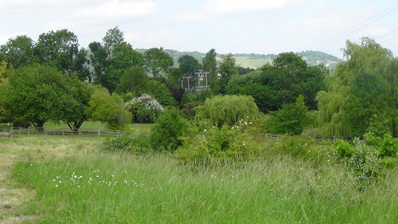
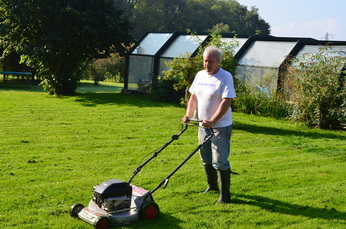
​ We have family for lunch today and my wife, who was preparing lunch, told me to  cut the grass. So I did and given the metaphorical discussion this week I mused over my grass. I have a lot of it but apart from cutting it I do nothing for it. It grows well because of the environment its in - well drained chalky soils, mild wet weather, sunshine, and all the animal life that lives on it and in it. At the moment its thick and green because of the coincidence of optimum conditions. My contribution is simply to cut it every few weeks. In inhibiting its growth it tends to grow more.

If we were to apply this to education then its about creating the optimum conditions for people to grow and that is more than feeding people with the metaphorical water. But in cutting my grass I am making it comply with my ambition to have a nice neat lawn. By analogy much of education does the same thing through standardised content, delivery and assessment. We need an educational system that encourages people to flourish without the continuous need to comply.

Picture
​I have a rough area of grass which is not lawn it's more like meadow.. I often leave it for several years before I cut and it behaves in a very different way. It supports a very different ecology, lots of different grasses and wild flowers, lots of things that we call weeds including brambles and even small trees when I leave it for several years. The point is, the same environmental conditions, without the constant cutting, creates diversity which ultimately is more resilient and more sustainable. So what does this mean for standardised education?

0 Comments

Using what I have learnt this week

3/10/2015

0 Comments

 
Picture
The metaphoric image of the watering can and the grass caused a number of comments most of them critical of the metaphor. I was pleased that I could apply what I have learnt about affordance to respond to a community post.
 
Craig Whitiker  about the grass picture, my feeling is that grass does not choose to grow or to turn away from the light which nourishes its growth.  Human beings, however,  have free will and can choose not to grow.


Picture
Picking up on Craig's point - perhaps grass does not consciously choose to grow but living things innately seek affordances in their environment to accomplish this task. It might be argued that a student seeks a course, with knowledgeable teachers in a university stuffed full of help, resources and technology to help him achieve that objective. His interaction with these affordances may, or may not, enable them to achieve this goal very well. But he will also be seeking affordances for growth from other parts of his life - hence my interest in lifewide learning. It's very much an ecological notion of learner in their total environment. The watering can represents only one aspect of the environment to sustain growth we need to consider the air, sunlight, natural precipitation, soil nutrients and biological agents, animals feeding and leaving their traces (including debbie's moles and my rabbits) etc....all might offer affordances that the grass can utilise individually and collectively, and the same is true of learners. We must also see the grass as part of a complex ecosystem which is why I have so many rabbits in my garden. They do a lot of damage and the population is impossible to control. The image reinforces my belief that we must adopt a holistic ecological view of students' learning and development - including their creative development.

0 Comments

Am I participating in a mini mooc?

1/10/2015

2 Comments

 
Picture

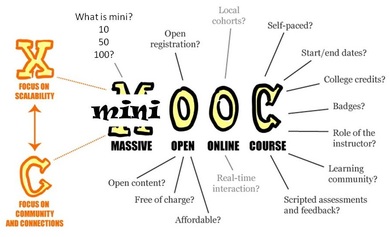
I used the term mini mooc in one of my tweets to describe my experience of this open learning course so far. Chrissi said she did not like the term and I realised that I didn't really know what a mooc was. I had, in 2009 joined one of the early moocs that George Seimens and Stephen Downes ran on Comnnectivism but I did not persist for more than three weeks. So I did not experience it properly. So I looked up what Stephen Downes had to say which I found very interesting and after reading what he said I still think the course with nearly 60 participants has the hallmarks of a mini mooc.
 

xMOOCs, i.e. adopt traditional pedagogical approach to teaching and learning (using video lectures, readings, quizzes, tests, discussion forums)
cMOOCs designed to challenge traditional approaches to teaching and learning by experimenting with a new pedagogical approach. At the extreme end of the c/x MOOC spectrum,  “c” could mean complex, chaotic, and/or connected
.
Rodriguez, C. O. (2012). MOOCs and the AI-Stanford like courses: Two successful and distinct course formats for massive open online courses. European Journal of Open, Distance and E-Learning, 2.
http://www.eurodl.org/?p=current&article&article=516


Stephen Downes
When people ask me what makes a MOOC 'massive' I respond in terms of the *capacity* of the MOOC rather than any absolute numbers.

In particular, my focus is on the development of a network structure, as opposed to a group structure, to manage the course. In a network structure there isn't any central focus, for example, a central discussion. Different people discuss different topics in different places (Twitter, Google Groups, Facebook, whatever) as they wish.

Additionally, my understanding is that for the course to be a *course* it has to be more than just a broadcast. Otherwise, 'Adventure Planet' is a MOOC. Or National Geographic Magazine is a MOOC. A course actually requires these interactive and skills development activities, rather than simply consumption of content.

So what is essential to a course being a *massive* open online course, therefore, is that it is not based in a particular environment, isn't characterized by its use of a single platform, but rather by the capacity of the technology supporting the course to enable and engage conversations and activities across multiple platforms.

In the first connectivist MOOC, for example, we have 170 individual blogs created by course participants (in Change11 we had 306 feeds). What made the course a MOOC is that these contributions were comprehended as a *part* of the course, and were all accessible to course participants, either directly, through the newsletter, or through alternative syndication using an OPML list.

Similarly, there wasn't just a Twitter conversation, or Second Life event, that happened coincidentally with the course, but rather, these events outside the 'main platform' were construed as part of the course, and comprehended in the course description, relevant links, newsletters, etc.

The big danger, to my mind, in a large online course is that through strong group-formation activities, it can become a small online course. This happens when a central clique or insider group is formed, or where you have inner circles and outer circles. The inner circle, for example, might expect and demand preferential access to and individual attention from the course facilitators.

When this happens the dynamics of the course change - for example (and not these are my observations and opinions, not hard established fact) the primary value becomes cohesion and agreement, rather than diversity and distinct perspectives.

When the course functions as a small group, there is an expectation that everyone will agree on the course content, objectives, and domain of discussion. But, in fact, to be a massive course, it must needs respect a wide variety of individual objectives, perspectives on course materials, and opinions about relevant topics of discussion (not to mention technological platform and language of 'instruction').

Consequently, when I have been asked in the past what number a course needs to attain in order to be considered 'massive', after providing the caveat just given above, I provide the figure of 150, Dunbar's Number, as the cut-off line.

Now to be clear, this would refer to *active* participants, and not merely the number of people who signed up. Thus for example the course that has 170 active blogs *does* qualify, while CFHE, which had 83 blogs, is on the cusp (it would need another 70 people active on other platforms, such as Twitter or Google Groups).

Why Dunbar's number? The reason is that it represents the maximum (theoretical) number of people a person can reasonably interact with. How many blogs can a person read, follow and respond to? Maybe around 150, if Dunbar is correct. Which means that if we have 170 blogs, then the blogs don't constitute a 'core' - people begin to be selective about which blogs they're reading, and different (and interacting) subcommunities can form.

2 Comments
Forward>>
     Creative Academic 
    #creativeHE

    this blog relates to my work for Creative Academic & contains insights gained from participating in ​the #creativeHE conversational space
    CREATIVE ACADEMIC WEBSITE
     #creativeHE
     FACEBOOK FORUM

    Author

    I am thankful for all the opportunities I  have to use my creativity and experience the creativity of others

    Archives

    November 2020
    April 2020
    March 2020
    January 2020
    December 2019
    May 2019
    April 2019
    February 2019
    April 2018
    March 2018
    January 2018
    December 2017
    May 2017
    April 2017
    March 2017
    January 2017
    November 2016
    October 2016
    July 2016
    April 2016
    March 2016
    February 2016
    November 2015
    October 2015
    September 2015

    Categories

    All
    Affordance
    Visual Thinking

    RSS Feed