norman's website
  • Home
  • Blogs
    • Scraps of life blog
    • Creative Academic >
      • BYOD4L BLOG
    • Garden Notes
  • Books
  • Change
  • Creativity
  • Professional services
  • Contact me
  • EC-Conference
  • Delft
  • luminate
  • OU employability
  • Qinghai
  • CISC
  • NTU
  • creativejam
  • CRC
  • GMIT
  • BNU STUDY VISIT
  • AIT
  • portsmouth
  • DIT
  • TLC
  • BERA
  • ICOLACE4
  • PDP
  • OUC
  • MMUni
  • Derby
  • dmucreatives
  • Chester
  • Brighton
  • Buckinghamshire
  • Hallam
  • St Marys
  • LIMERICK
  • kingston
  • UWL
  • SEDA
  • MACAO
  • Beijing
  • IFIUT
  • CRA seminar
  • FBSEworkshop
  • birmingham
  • Creativity in Higher Education
  • graduatestandardsprogramme
  • MAKING MEANING

Birdlife

9/2/2024

0 Comments

 
Birds are the most visible wildlife we see and hear on a daily basis.  Their songs are an important part of the ambiant sounds of nature and their flight provides movement animates the spaces around us. Perhaps because they are omnipresent we often take them for granted. January is a good time for bird spotting. Food is scarce and it is easy to set up a feeding station to attract birds. Furthermore, the annual RSPB Big Garden Birdwatch survey scheduled for Jan 26 to 28 in 2024, focuses attention on our native birds and encourages us to join the worlds largest wildlife survey.

We now have a wonderful Whatsapp Nature Group in our village so I proposed that we undertake our own survey and record the birds we spot in and around the village. I created a simple recording form with photos of 20 common birds and posted it in the Whatsapp group with the message that I will curate the photos that are posted. We are now a few weeks into the survey and so far we have sightings (in the past year) of around 52 different species. We will continue to add to these and my personal project is to try to photograph as many species as I can find.

I watched a lot of youtube videos that provided factual information about native wildbirds, their feeding habits and the best foods to provide through the winter. We are currently experiencing a cold snap with harsh frosts and fozen ground so food is scarce. I set up the bird table and some bird feeders with seed, peanuts and suet and fairly soon had a lot of visitors.

After a few experiments of trying to photograph the birds as they came to feed with my mobile  phone camera I realised it was not up to the job, so I invested in a new camera. After researching cameras for wildlife photography (especially birds) in my budget range I chose the Nikon Coolpix B700 which has a reasonable zoom and a 1” sensor giving 20 megapixel photos. Again I watched a lot of YouTube videos providing practical advice on bird photography but soon adopted a trial and error approach – and realised it is still not easy to take a good photo. You have to spend a lot of time sitting quietly waiting for the birds to come to you and in very cold weather that requires patience and discipline. But over a couple of weeks I managed to get around some good photographs of wildbirds.

But the revelation in photographing wildlife came another way. I was given a wildlife camera as a Christmas present – the type you leave outside and it takes photographs and videos if the sensors sense movement. The camera takes lovely sharp images and it also has night vision. I have really enjoyed moving the camera around the garden to try and photograph the birds that were tempted by the food I had provided. Some of the photos were stuunning and I had a lot of fun moving the feeders around the garden. But nature has a way of surprising you. After a few days, no matter where I located the feeders, they were dominated by jackdaws, phesants, parakeets and squirrels. While I'm not averse to feeding the bigger birds my intention is to provide seed for the smaller birds, so I’m now trying to work out how to distribute food to the smaller birds.
​
I was able to share my photos in the Nature Whatsapp Group which has, I think inspired others to be more aware of our birds. In fact I can tell from some of the comments that others would also like to take photos like mine. The photos in the movie below combine images from my hand held camera and the static wildlife camera.
0 Comments

Transforming the landscape

11/1/2024

0 Comments

 
Picture
​One of the things that gives me most joy is transforming something. I really like seeing something I can change then having a go at changing it. It is one of the reasons I love working in my garden, field and woods because over relatively small timescales I can bring about change on a noticeable scale. My posts and the photos I take provide evidence to back this claim.

I am nearing the completion of my latest tranformation project. 
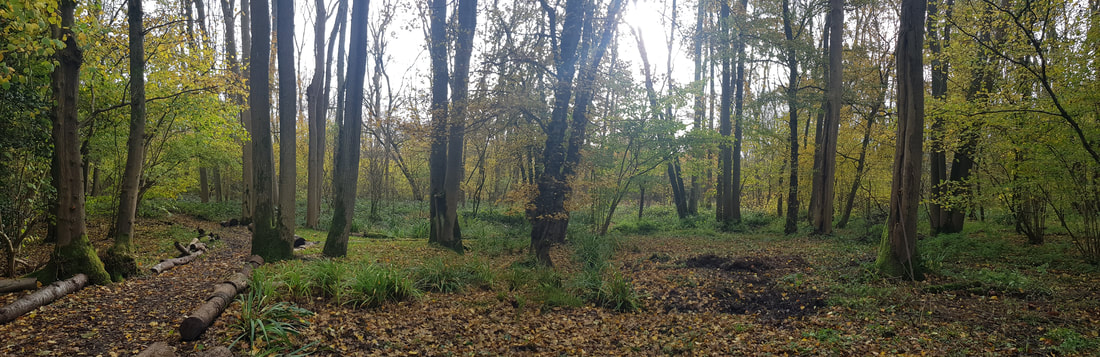
There is a patch of neglected woodland near the gate. As long as we have known it, it has been overgrown with brambles and nettles in the summer but bare and waterlogged in the winter. Its also been a dumping ground for tree branches that have fallen or been cut. Two months ago I began clearning this area and digging drainage ditches. As I started digging into the wet clay it immediately filled with water. The more I dug the more it filled with water and I decided that it would be nice to have another pond. At the end of  a week of spending a few hours a day digging (it was heavy work) I had a sizeable structure. I created banks from the clay I dug and added some sand and peat to the clay to improve it as a medium. I then spent several weeks clearing the edges of the pond digging up bramble and nettle roots and adding top soil from the field to raise the level of the ground. It was very wet and muddy but I was bouyed by the progress I could see I was making. The next task was to transplant woodland sedges which are prolific elsewhere in the woods - I must have tramsplanted over 100 a few big ones and lots of smaller ones but they immediately turned the brown muddy floor into a tract of vivid green vegetation.  


I like ferns and have always wanted a fernery so I decided to plant the banks of the pond with ferns, some were transplanted from the garden and woods but I bought around 20 new ferns including, Dryopteris Eryhrosora
Dicksonia Antarctica
Doodis Media
Dryopteris Erythrosra
Dryopteris filix-mas
Blechnum spicant
Polystchum tsus-simense
Hartstongue

It looks a bit bare at the moment but past experience tells me that in a few months it will look very different.

​The final act was to plant some wood anenome rhizomes which, I hope, will provide a lovely display od native wildflowers in March and April.
0 Comments

Time to focus on Birds

3/1/2024

0 Comments

 
Well a new year has begun and as happens every year I look forward to what nature has in store as life unfolds around me. My first nature project is going to be focused on the birds that inhabit or pass through this place. I have always enjoyed watching birds and while appreciating them as wild animals I have never taken the time to study them. year, I decided, I was going to pay more attention and also try to encourage members of our Nature Whatsapp group to participate in a survey.

I made a start by resurrecting our bird feeding table and stocked it with wildflower seed and fat cakes. Perhaps because the weather was wet and windy few birds bothered to look at it for about a week but with the drier weather it aroused interest amongst a flock of blackbirds, together with magpies and pheasants.
After a few attempts to photograph some birds I realised that I could not get close enough to them to take a good photo. Photographying birds requires more than the camera in my mobile phone. Over the Christmas holiday I did some research into what was the best point and shoot camera for bird photography and my searches came up with what I thought was well reasoned advice from wildlife photographer Bryan Pfeiffer who suggests that the Nikon Coolpix B700 does the job at the budget I can afford(1). It’s got a 60x zoom and a 20-megapixel sensor. I tracked one down on e-Bay – used but in good condition. I’m very excited and it will arrive in a few days.

Over Christmas I set up a new website https://natureshare.weebly.com/ to enable the photos and videos of the Nature Group to be curated. I added a page for Birds and put together an information sheet on 20 common garden birds and added a simple survey sheet and posted an invitation to participate in a survey in our Whatsapp nature group. And so my work with and for nature in 2024, begins.

(1) https://bryanpfeiffer.com/photography/photography-resources/point-and-shoot-cameras-for-wildlife/ 
Information Leaflet - Betychworth Bird Survey
betchworth_bird_survey.doc
File Size: 762 kb
File Type: doc
Download File

0 Comments

How one project with nature leads to another

26/12/2023

1 Comment

 
Looking back over the year I can now see the wisdom in John Dewey’s expression that we do something to the environment and it does something to us. I began the year by digging a pond in the middle of the wood and in the process I was inspired to create a path through the wood to the gate. Where the path started I created a grassy knoll from the turf I dug up from the field and planted bluebell bulbs into it. Having created the knoll I began to landscape around it, digging up the roots of brambles and nettles and transplanting wild sedges from other parts of the wood. This process encouraged me to accentuate the small hills and valleys in the existing topography. Once the rains began in late October puddles began to form in the area I was digging as the water table intersected the surface. I knew I had to dig another pond so I am finishing the year as I started it  – digging a pond!
1 Comment

November reflections

30/11/2023

0 Comments

 
Coming to the end of the year prompted me to reflect on the nature projects I had undertaken and how one project had fed into and stimulated another. In January I dug and landscaped a pond and this prompted me to build a new pathway through the middle of the woods which I have used many times since. I planted native blue bells and wild garlic in the green along the side of the path and had some success but I am hoping for more this year. 
Picture
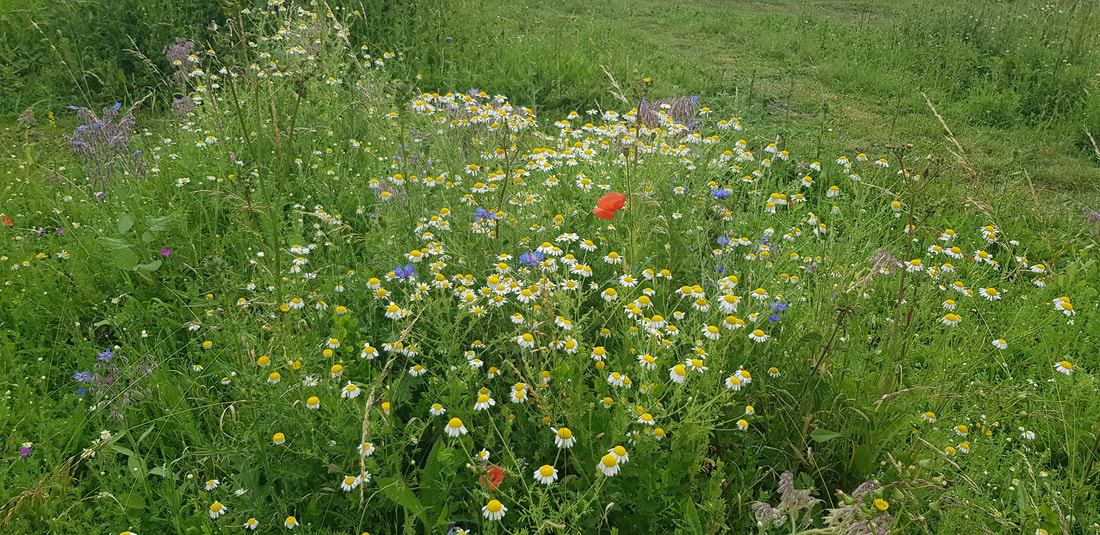
Through February and March I dug out over 300 sq m of turf in the field and sowed wildflower seed.It took until late June to flower but the flowers provided much pleasure throughout the summer
Picture
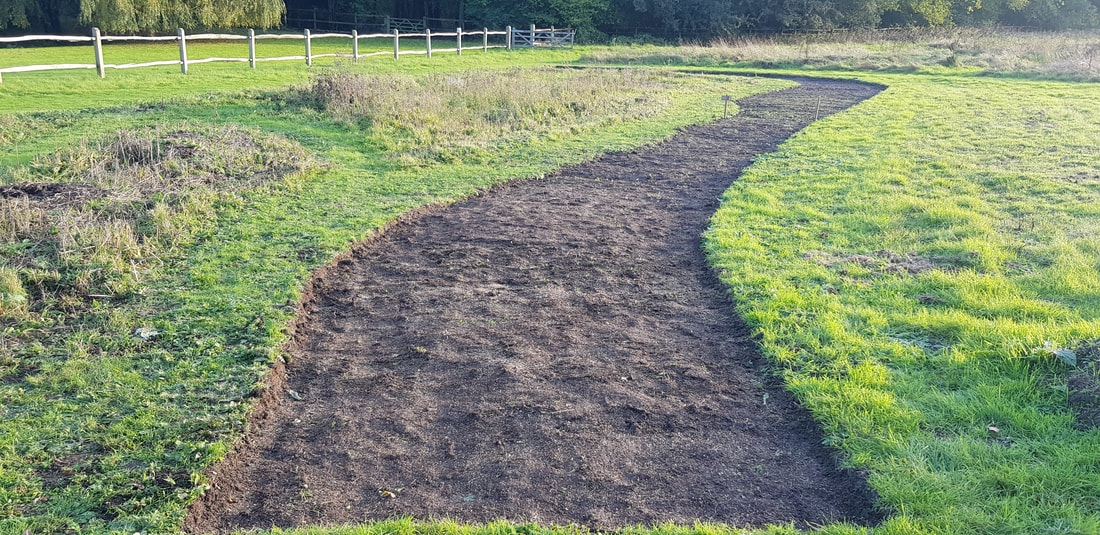
I judged my wildflower for insect pollinators to have been successful so in August I began planning to extend my mini B-Line. I imagined a curve on the outside of my existing cultivation about 2 to 3m wide and I worked on it for much of September and October spending a couple of hours a day on most days digging up the turf and barrowing it to the woods. 
Picture
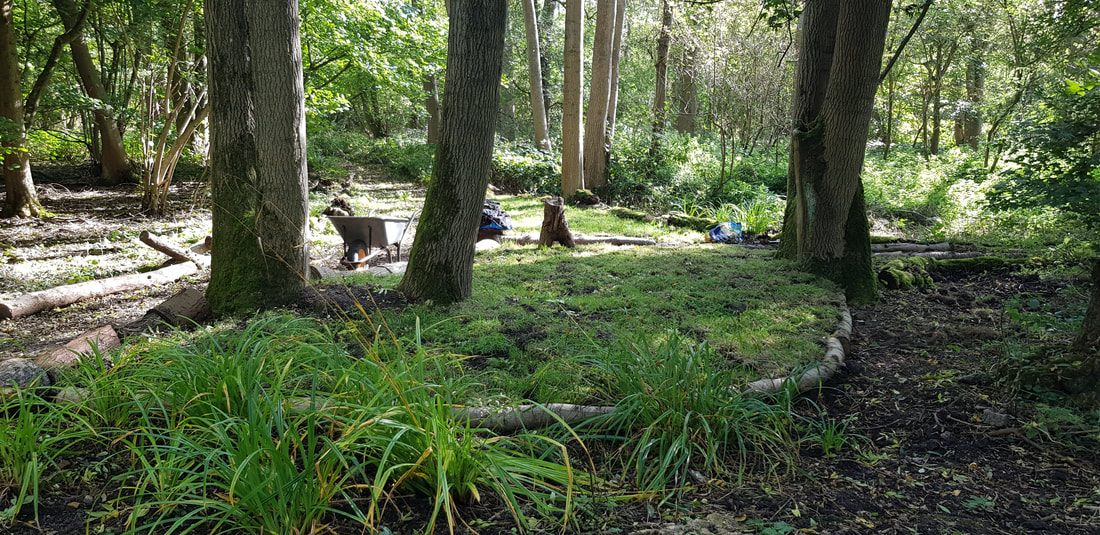
I used the turf to create my grassy knoll - another labour of love, into which I planted a couple of hundred native bluebells.. The knoll looked a bit bare so I began landscaping it with wild woodland sedges dug up from other parts of the woods where they are abundant. I counted 60 plants that I had transplanted.
Picture
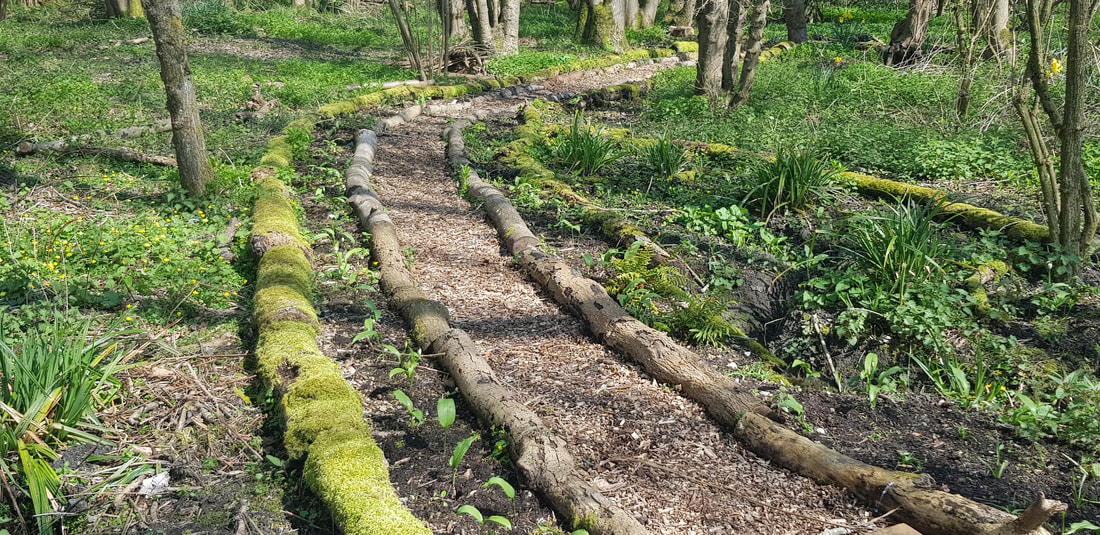
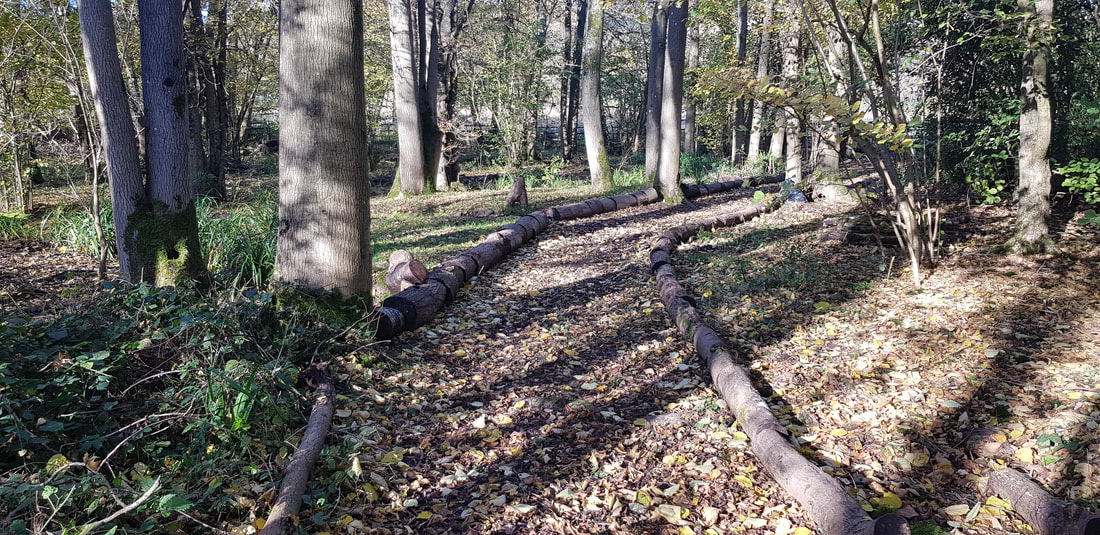
I got distracted and in November I spent quite a bit of time lining the main pathway through the woods with logs and segments of tree trunks.. It was quite physical and I had to scour the woods for logs of an appropriate size and that often led onto doing other things -  like diverting an existing path or stacking branches and moss covered logs. Fortunately, I didnt damage myself lifting, carrying, rolling and wheel barrowing the logs.
Picture


0 Comments

Creating a woodland grassy knoll

17/10/2023

0 Comments

 
I began extending my own mini-B-Line in mid August (see my post). I wanted to move my wildflower cultivation into the field and so I started digging with a vague idea of wrapping around the existing wildflower area. I envisaged a curving or sinuous cut about 2 metres wide. I decided not to pile the upturned turf along the edge of the cut as these mounds generated lots of weeds. So I had to decide what I was going to do with turf.

I wandered down to the woods and imagined I could do some landscaping with the turf – parts of the woods are often boggy or have standing water in the winter as the water table rises. In January of this year I created a new path through the woods and raised the level of the ground along the path to ensure it was above the water table. It has opened up the middle of the woods and my intention is to keep developing this area.

Drawing on this experience I thought I might try to increase the level of the woodland floor at the start of my new path by creating a small grassy mound or “knoll” into which I could plant native bluebells and other wildflowers. The area was overgrown wiith brambles and nettles and in early September I made a start by clearing them and then dumping the upturned sods of earth on top of the existing woodland floor to a height of about 60-70cm. As the mound grew I began to shape it and add turf to the top. I am not sure whether the grass will grow in the shade so it is all a hopeful experiment. In this way I was able to knit two different regenerative nature projects together – a new wildflower strip and woodland grassy bluebell knoll. It has taken me the best part of 2 months working a few hours on most dry days to complete the project, but today I dug the last piece of turf and laid it on the now complete knoll.

When working on projects like this I am acutely aware of how the environment and the materials I am working with shapes my actions. For example, the shape and dimensions of the knoll only revealed themselves as I constructed it. The shape was influenced by the existing contours but not constrained by them. It is also clear to me that new dimensions to the project emerge as it unfolds. For example half way through building the knoll I started working on the edges to the woodland path and for a few days this became my main priority. Similarly, I conducted an early experiment in transplanting sedges at the edge of the knoll and going forwards I will increase the topography by deepening the drainage depressions and building up the banks and then transplanting the sedges in the depressions. In this way I will help the sedges displace the brambles and nettle infestation. Wood Sedge is an important plant for wildlife, as it provides cover and food for many species. The foliage is eaten by deer, rabbits, and other small mammals, while the seeds are a food source for birds and small mammals. In addition, Wood Sedge is a host plant for the larvae of some butterfly species

It’s required a lot of effort but I have made good use of the turf (reused and conserved the resource within the area) and elevated the land so that it sits above the wet season water table. I’m also hopeful that it will help control the infestation of brambles in this area. I have enjoyed the feeing of doing something significant to reshape my environment in a way that I know should improve both its aesthetic appeal and plant biodiversity of this area, which should help insect pollinators to flourish. I also know that in years to come, when I am no longer here, other people and living things, will appreciate and enjoy the results of my labour.


0 Comments

Making sense of my journeys

11/9/2023

0 Comments

 
POST #21 PATHWAYS TO A MORE SUSTAINABLE FUTURE

We live emergently but make sense of our lived experiences reflectively. By that I mean that we perceive the world, make decisions about what we wil do and act, and then react to what happens, Only at the end can we fully comprehend and appreciate the results of our efforts and what we have learnt through the process. The last 20 posts record what I have done and contain some reflections and in this post I share two synthesis movies of my experience of trying to help nature, the environment and sustainability. The first shows the evolution of my wildflower meadow project. The second attempts to relate and intgegrate this pathway project with the lifewide inquiry and a community project I am involved in.


​Connecting three pathways
0 Comments

Playing in and with Nature

8/9/2023

1 Comment

 
POST #20 PATHWAYS TO A MORE SUSTAINABLE FUTURE

The Science Is Clear: Play Is Critical for Children’s [development] and Improves Well-Being for Adults

Play is state of mind that one has when absorbed in an activity that provides enjoyment and a suspension of sense of time. And play is self-motivated so you want to do it again and again.

The characteristics of play all have to do with motivation and mental attitude, not with … the behavior itself.

National Institute for Play, California https://www.nifplay.org/ 

Context: We have just had our September Zoom meeting and one of the participants mentioned that she felt her inquiry had provided opportunities for play. There seemed to be agreement amongst other particiipants that our inquiries provided opportunities for play.

I began to think about my own inquiry formed around the cultivation wildflowers and encouragement for natural wildflower regeneration for insect pollinators and how much the idea of playing featured whenever I’m outside doing stuff in and with nature. Clearly there has been a signficant element of work – for example the sustained physical effort of digging up the matted roots of grasses to create patches of bare soil for sowing. But there are also elements of play within the activities – for example just wandering and looking and listening and experiencing the wildflowers in my garden without worrying about time, is for me, a form of play. Perhaps the play is the reward for work and perhaps the opportunities for play are what sustains commitment in the end?

Concepts: Play is defined as a intrinsically motivated activities done for recreational pleasure and enjoyment [1] Brown [2] defines play as experiences that meet the following criteria: purposeless, voluntary, fun, outside of time (i.e., a flow state), less self-conscious, improvisational, and with a continuation desire (i.e., a desire to continue doing it once we have started). All aspects of my project would be contained within these characteristics except for the idea of purposeless which intuitively seems to me to be wrong. Much of my play as a child was grounded in the idea of exploring and discovery, or winning or getting better at something. My project to cultivate wildflowers is being undertaken for a purpose beyond myself ie to help nature, and that is is a deeper purpose than merely recreational.

The California-based National Institute for Play describes seven contexts and patterns for play[3]I can recognise three of these within my own activities
1 Attunement Play – through which I have been able to develop a deeper connection and relationship with the natural world of which I am a part
2 Creative Play – through which I have been able to create representations and artefacts with aesthetic appeal for example through my photographs and movies. One might argue that the  very production of a wildflower garden from a field dominated by grasses is a playful but purposeful act of creative play within which elements of work are integrated.
3 Storytelling – the production of stories (my blog posts and presentationsand my movies) describing, interpreting and reflecting on my experiences to share with myself and others.

Brown [2] identifies eight play personalities (Table 1). In truth, we mix these types depending on the context and, for what it’s worth, I can see in the context of my inquiry aspects of Explorer, Director, Collector (I would use Curator), Storyteller and Creator. Last night I helped set up a Moth Trap in my garden with an ecologist friend and early this morning we spent several hours examining and identifying the moths that had been trapped. It felt like play with a purpose, more than recreational and not like work.

Table 1  Play Personalities according to Stuart [2]
The Joker – plays with and through humour
The Kinesthetic - plays through body movement that celebrates the body’s presence and movement in the world.
The Explorer/Investigator - plays through learning. They want to know and understand. This type of play is a way of exploring and orienting to the world.
The Competitor – play in order to win or prove themselves against others
The Director - plays through building systems, processes and organizing. People who enjoy playing in this way find the experience of organizing, arranging, and directing as intrinsically satisfying.
The Collector - collectors are appreciators. They spend energy hunting, acquiring, and building a collection of useful, attractive, or interesting things or objects including gardeners who create botanically wonderous landscapes.
The Storyteller feels the release of play through telling and listening to stories. They are the authors and the novel readers, but more so – they are people who craft narratives from ordinary life.
The Creator - the creative person is inherently at play when they create. Whether it’s a traditional artist who paints, sculpts, or draws or nontraditional creators like landscape contractors, model railroad builders, crafters, and even aquarium owners, people who delight in imagining new ideas and bringing them to life are all enjoying the play style of creator.

I agree that play is a ‘state of mind’ and if we have the attitude we will find affordances for play in almost any aspect of our life. I think this is a characteristic of human creativity and I have been very fortunate in my life to find endless opportunity to play in the different roles I have inhabited. My job often became my hobby as well and that was all I needed to keep me engaged.

Whether I like it of not (and others I’m sure will feel the same) I tend to see situations (including work) as opportunities for play. What I've concluded from my own project is that what might be described as work, like the laborious digging and weeding I’ve done was interspersed and offset by other things I've done that are most definitely playful and enjoyable.
 
My realisation is that its the integration of these two modes enable me to stick at it and ultimately create the value for nature and myself that I'm trying to achieve... I am very happy to posit this as a theory for enabling some people to sustain commitment to significant tasks, that require investment of a lot of time, energy and resource. Such a theory could be framed using a phrase like:
 
While recognising that some people may see play as inappropriate for the serious challenge of living and learning for a more sustainable future, some people might appreciate the value of integrating play amongst the strategies they use to sustain their commitment to achieving this goal. In this way they utilise opportunity for creativity and in the process they enhance their own wellbeing.


One of the most signficant lessons for me has been the growing awareness that through my actions to help nature I am not separate from nature, I am part of nature with an important role to play in helping nature achieve its potential to recreate itself and in the process I contribute to my own formation.
 
Sources
1 Garvey, C. (1990). Play. Cambridge, Massachusetts: Harvard University Press.
2 Brown S (2009) Play: How it Shapes the Brain, Opens the Imagination, and Invigorates the Soul New York: Penguin Group.
3 National Institute for Play. "The Science – Patterns of Play" https://www.nifplay.org/what-is-play/types-of-play/
1 Comment

Completing the Cycle and New Beginnings

17/8/2023

0 Comments

 
POST #19 PATHWAYS TO A MORE SUSTAINABLE FUTURE
​
We have reached mid August and that part of the natural cycle where it is necessary to cut the grass and wildflowers that have gone to seed in the natural garden meadow. Nature teaches us that this cycle of plant life that has nurtured the insect pollinators over the summer months is now passing on its genes to begin the next cycle of life.

Our Re-Betchworth team offered a scything workshop last weekend so I joined it and over the course of the day was introduced to the scythe and the mowing technique and gained a few hours experience of cutting wildflowers and grasses using the scythe. The workshop was excellent but by the end of it I realised that it was much too slow and labour intensive to use on my wildflower meadow.
Picture
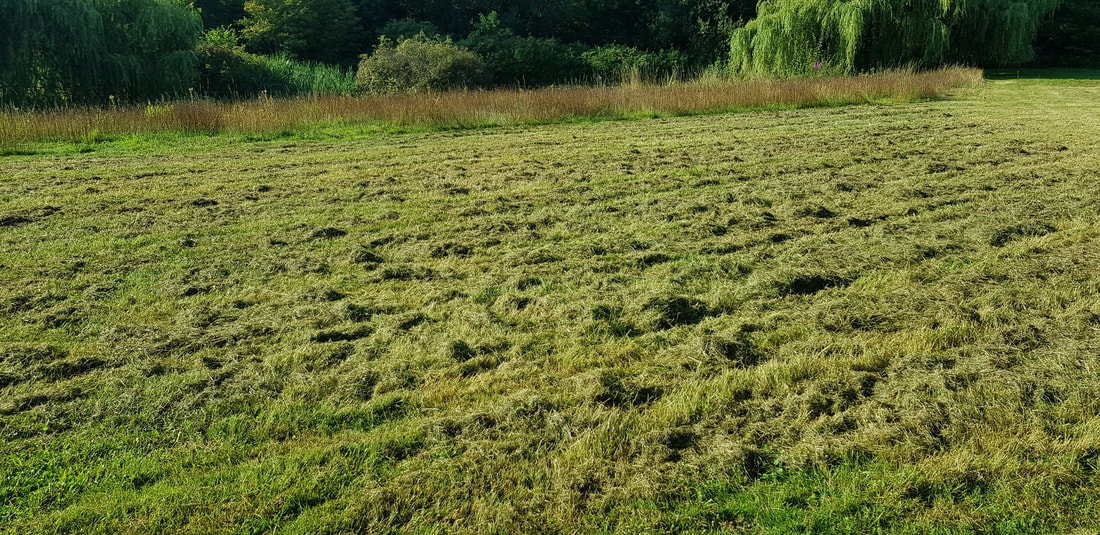
A walk through the meadow demonstrated that there were still plenty of buterflies and pollinating insects foraging so I took my time cutting it with the tractor, one area at a time, rather than tackling the whole thing in one go which I had done in previous years. I began with a high cut, to encourage any animals to escape, allowing the grass and wildflower cuttings to lie for a few days for seed to drop. Then using the mower I made a low cut and hoovered up the cuttings for composting. It was quite time consuming but the task was completed by spending a few hours a day for a couple of weeks

Picture
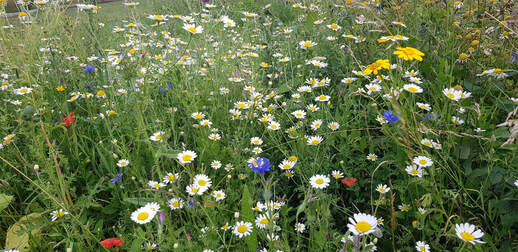
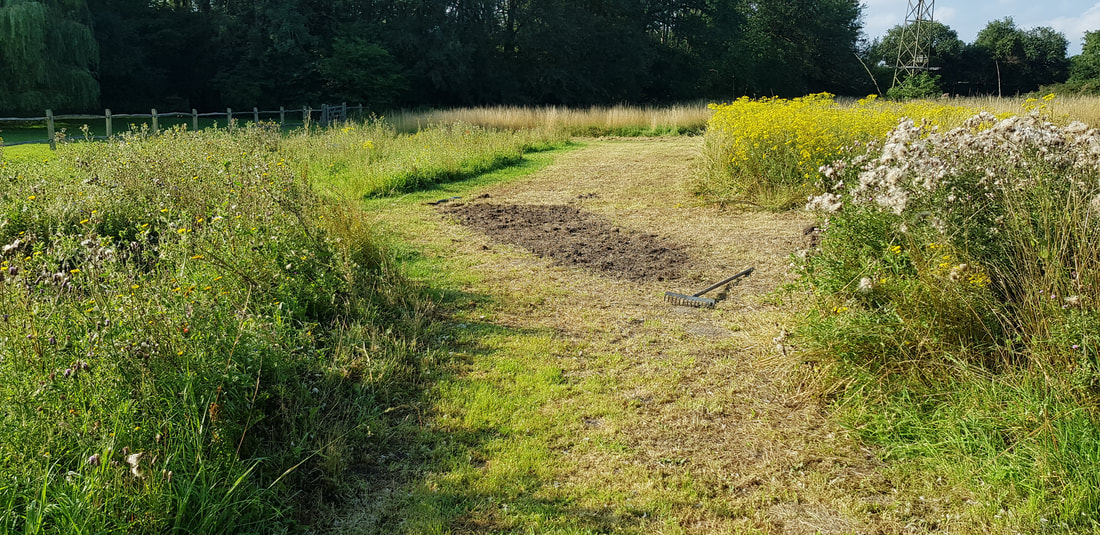
My wildflower cultivation is a mass of flowers and a delight to behold. It began to flower in late June as the oxeye daisy meadow finished flowering, and it has continued throughout July and August attracting a lot of insect pollinators. I consider it to have been a great success with all but one of the areas sown flowering. It has motivated me to extend my experiment and made me think about how might extend my own wildflower cultivation. I wanted to add another strip deeper into the field but I also wanted to incorporate the natural wildflowers in the field especialy a patch of thistles and a patch of ragwort which I had been realised were very important for pollinators. I did some grasscutting and began digging up the turf in a new strip about 1.5m wide by 30m long. I will purchase more wildflower seed and sow this area in September. I will also add some of the oxeye daisy seed I collected from my garden meadow.

Below: Expanding the wildflowerf meadow into the field from left to right - existng cultivation, grass path, new strip being prepared by taking up the turf, grass strip (the grass will be kept short), existing field containing ragwort, thistles and other wild flowers.

Picture
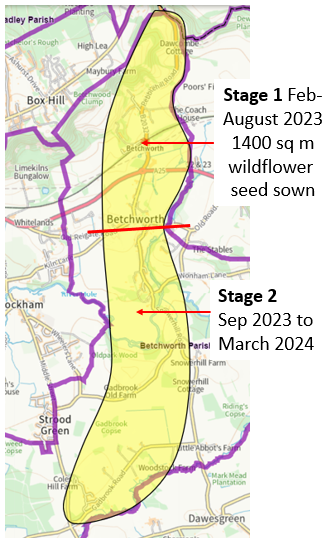
I edited our  magazine  and it was published last week. I contributed an article summarising the progress we have made on our village biodiversity line. I met with my B-Line team mates  to plan the next stage of our community project and we agreed a strategy and a division of labour – to knock on doors and invite residents in the southern part of the village to sow wildflower seed in September. Our intention is to extend our biodiversity corridor down to the southern boundary of our parish – a distace of around 5km – 2 km further than we originally intended.
Picture
0 Comments

Reflections on how the inquiry has affected me

5/8/2023

0 Comments

 
POST #18 PATHWAYS TO A MORE SUSTAINABLE FUTURE

Our health, sense of wellbeing and sense of who we are (identity) and who we are becoming (learning and development) are influenced by the way we live – our habits, our relationships, circumstances, problems, illnesses, achievements and how we deal with setbacks, and day to day experiences. These feelings emerge through our everyday living but they develop over the accumulation of lots of days of living. There are therefore two scales of involvement – the lifewide and lifelong.

In our inquiry we focused on the question of what motivates us and how commitment to a belief or cause develops. We explored the diverse range of needs that compel us to do what we do. Being able to satisfy these needs, at least in part, helps us achieve a sense of wellbeing - feeling comfortable, healthy, satisfied, happy and or fulfilled that we are living a life with purpose and meaning. While tackling and making progress with challenges, or seeing and acting on new opportunities satisfies our need to learn and develop.

Our inquiry is underlain by the proposition that by helping nature, the environment and sustainability we are helping ourselves and our stories of participation reflect the choices we are making to help ourselves in our own circumstances. As we move into the final stage of our inquiry it is important to reflect on whether or how this proposition was realised and manifested in our own projects. 

My responses to the reflective prompts
reflections_on_how_the_inquiry_has_affected_me.pdf
File Size: 159 kb
File Type: pdf
Download File

0 Comments
<<Previous
    PATHWAYS DIARY
    In March 2023 I began an experiential inquiry called Pathways to a Sustainable Future and many of my posts between March-September were written for this project.
    ​Diary Starts Here

    Garden Notes
    My garden is much more than a garden. Its playground, a studio for my artistic efforts, a natural laboratory for experiments and learning and a place for contemplation. It keeps me busy and gives me the exercise I need to keep fit, although it does damage me from time to time. But more than anything else it gives me pleasure, happiness and a sense of belonging and of doing something useful and worthwhile when I am immersed in it. It enables me to express myself creatively and draws my attention to the beauty and ecology of life. In this blog  I am telling the story of my garden and my involvement and experiences in it through my writing and the photos, movies, music, paintings and other artefacts - it inspires me to create. I have become more conscious of the UNs Sustainable Development Goals and our important role in enabling their achievement my experiments and projects in the natural world show how I respect and try to understand nature and try to enable life to flourish. I know that one day I will not be the custodian of this beautiful landscape we call our home. I must make the most of it now and preserve its presence in my memory knowing that it will carry on long after I am gone and that someone else will care for it and call it their home.
    In March 2022 I joined a group of environmental activists in my village and so I have decided to expand my blog to take in the natural world around me.  

    Picture
    Useful Links
    RE Betchworth
    Wildlife Garden Forum
    Surrey Wildlife Trust 
    Habitat Network
    Plant Identification UK
    ​GAIA
    ​
    GOOGLE EARTH
    ​


    Archives

    February 2024
    January 2024
    December 2023
    November 2023
    October 2023
    September 2023
    August 2023
    July 2023
    June 2023
    May 2023
    April 2023
    March 2023
    February 2023
    January 2023
    December 2022
    November 2022
    August 2022
    July 2022
    June 2022
    May 2022
    April 2022
    February 2022
    January 2022
    December 2021
    October 2021
    July 2021
    June 2021
    May 2021
    April 2021
    March 2021
    February 2021
    December 2020
    November 2020
    October 2020
    July 2020
    June 2020
    May 2020
    April 2020
    February 2020
    January 2020
    December 2019
    August 2019
    July 2019
    May 2019
    April 2019
    March 2019
    February 2019
    January 2019
    December 2018
    October 2018
    September 2018
    August 2018
    July 2018
    June 2018
    May 2018
    April 2018

    Categories

    All

    RSS Feed